My Year in Books – 2011

I’m a few days late (thanks to some looming writing deadlines, and all the media attention this week over my Grandma’s story), but here is the list of the books I finished in the last year, separated by the month in which I read them.

(I am also “currently reading” 16 different books – which, I can’t even talk about that. I so prefer reading books one at a time. Such is life with small boys.)

I publish this list, really, in the hopes that others will follow suit (and if you do, please direct me there.) I love knowing what people are reading. In fact, when I see a photo of a home library in Architectural Digest, I always turn the magazine sideways and peer at the spines of the books, trying to see the titles.

I know. NERD. Continue reading

Coffey’s Angels

One of my favorite writers is celebrating the release of his second novel today – so naturally, I had to get in on the fun.

If you’re unfamiliar with Billy Coffey, let’s fix that right now. Billy is a thirty-something writer from Virginia who keeps a blog called What I Learned Today. Ever since I discovered it last year, it’s been the one blog I would choose to take with me if I was going to be stranded on a desert island. (You know, if said island had electricity and wi-fi.) The posts consistently inspire me, soothe me, and remind me of things I didn’t know I’d forgotten.

And also, Billy’s one of the finest writers I’ve ever read. I don’t mean “in the Christian world.” I mean, anywhere.

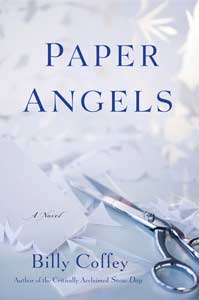
In 2010, Billy turned his attention to fiction and published his first novel, Snow Day. His second novel, Paper Angels, was just released today.

These are the only two Christian novels I’ve chosen to read in the last seven years. Continue reading

I Don’t Know How She Does It

We need to talk about Alice Munro. Oh, how we need to talk about Alice.

On most subjects, it is difficult for me to pin down my “favorite” thing: meal, drink, movie, color – there are just too many different categories, people. Who could possibly be so decisive? But when it comes to writing, I have no such difficulty. Of the thousand or so different authors I’ve read, for my money, Alice Munro is the best.

Alice is a Canadian who writes fiction, mostly short stories, and she has earned the highest respect of virtually all literary critics and most successful writers. Think of a writer you love (go ahead), and I can almost guarantee that not only are they familiar with Alice, they are at least slightly in awe of her talent. The perennial literary darling Jonathan Franzen calls her “the Great One.” In a 2004 piece in The New York Times (which was ostensibly a review of Alice’s book Runaway, but which was actually a lengthy essay on Alice’s sheer awesomeness), Franzen said this:

“She is one of the handful of writers, some living, most dead, whom I have in mind when I say that fiction is my religion. For as long as I’m immersed in a Munro story, I am according to an entirely make-believe character the kind of solemn respect and quiet rooting interest that I accord myself in my better moments as a human being.”

Whenever Alice pens a new short story, it is snapped up by one of the most prestigious publications in the world. Her work is included in nearly every annual “Best of the Year” story collection. In 2009, she won the Man Booker International Prize (given for a lifetime body of work), only the third person to have done so.

Yet Alice Munro is not a household name – and to serious readers, this is a serious affront.

Here is how it is between Alice and me: I don’t know how she does it. And I couldn’t care less. (I spent about five minutes, once, trying to figure out her technique, and then I wisely gave up.)

Can I at least describe what Alice does? I can try, but the problem there is, unless you are actually Alice herself, you don’t possess the literary talent to do her work justice. Quoting her directly is a better method of illustrating what she does.

Well, since you asked.

From the 1997 compilation of her best work, Selected Stories:

“The doctor, the heart specialist, said that her heart was a little wonky and her pulse inclined to be jumpy. She thought that made her heart sound like a comedian and her pulse like a puppy on a lead. She had not come fifty-seven miles to be treated with such playfulness but she let it pass, because she was already distracted by something she had been reading in the doctor’s waiting room.”

And from another story:

“Stella wonders where this new voice of Catherine’s comes from, this pert and rather foolish and flirtatious voice. Drink wouldn’t do it. Whatever Catherine has taken has made her sharper, not blunter. Several layers of wispy apology, tentative flattery, fearfulness, or hopefulness have simply blown away in this brisk chemical breeze.”

And here is the final paragraph of one of my favorite stories, “Material”:

“Gabriel came into the kitchen before he went to bed, and saw me sitting with a pile of test papers and my marking pencils. He might have meant to talk to me, to ask me to have coffee, or a drink, with him, but he respected my unhappiness as he always does; he respected the pretense that I was not unhappy but preoccupied, burdened with these test papers; he left me alone to get over it.”

It is often noted that Alice’s short stories contain more depth than most full-length novels. Not only does she waste no paragraphs or sentences, she seems to waste no words. But her prose is not terse, like Hemingway’s; it is rich and full, it breathes and floats and is full of warmth.

It’s also as sharp as a dagger.

There are no zombies in Alice’s work, no explosions or natural disasters, no fantastic plots, very few murders. This is not how she keeps a reader turning the pages. Alice generally writes about simple people: housewives and grandparents and bewildered young women and children, in the most normal of settings: in cars, on farms, in retirement homes or back porches or shabby living rooms – but in the middle of this perfect ordinariness, she (as one reviewer put it) “flays” her characters, exposes their inner lives in ways that are shocking in the sense of recognition they stir in the reader.

Even if you have never been in these situations yourself, you think, “Yes! Yes. That is exactly how it is.” Even if you have never met anyone like these characters, you believe that Alice has pegged them perfectly.

Within a sentence or two, Alice gives you exactly enough information to completely understand how each character operates and what motivates them. This is in no way an easy skill. There are very few novelists who can do this, and none do it as well as Alice Munro.

Virtually all of her stories are sprinkled with the kind of sentences that most talented writers are happy to craft a few times in their entire careers. Like:

“Because if she let go of her grief even for a minute it would only hit her harder when she bumped into it again.”

Or when a character narrates this:

“This was the first time I understood how God could become a real opponent, not just some kind of nuisance or large decoration.”

Who the freak writes like this?!

The author Pat Conroy, in explaining his love of reading (and great writing), says this:

“I cheer when a writer stops me in my tracks, forces me to go back and read a sentence again and again, and I find myself thunderstruck, grateful the way readers always are when a writer takes the time to put them on the floor.”

Which nicely illustrates the difference between mediocre writers – or even good writers – and great ones. If you’ve ever wondered what the difference is between “literature” and every other kind of fiction, I believe that would be it. Average writers may have the ability to capture me with a story, but they do not write stunning sentences that put me on the metaphorical floor with their beauty.

Alice Munro does this, to a greater degree than any other writer I’ve read. In fact, if I was going to be stranded on a deserted island, and could only have one work of fiction with me, I’d choose her Selected Stories.

Yeah, she’s that good.

Look, Alice doesn’t have to be your favorite writer. You don’t have to love her work as much as I do. Her stories don’t have to be your “cup of tea.”

But, my dear fellow writers: if, while reading Alice’s best work (and Selected Stories or Runaway are excellent places to start – or shoot, check out her story “Dimension,” here), you do not at least recognize the level of skill she possesses, if you do not see the genius of what she’s doing – well then, in my opinion, you have some more work to do.

That’s all.

Have you experienced the writings of Alice The Great? And which authors put you “on the floor” with their writing?

Objects in the Mirror…

It goes far beyond the familiar warning about objects in our rearview mirrors, by now. I hate to tell you this, but all sorts of objects, everywhere, might not be anything like they appear.

I’ve been reading a book that my friend Ron recommended, called The Drunkard’s Walk: How Randomness Rules Our Lives, by Leonard Mlodinow. By a few pages in, I loved it so much, I wanted to weep. Give me a book about geeky-fascinating, blow-your-mind science stuff, and I’m a goner.

The book is about (and do NOT run away here – I’m getting ready to tell you some funky-cool things) probability theory, chance, and how psychological illusions cause us to misjudge the world around us – not because we are stupid or gullible, but because these illusions are so powerful.

I think of it this way: our complex psychological and emotional makeup constantly interferes with our ability to analyze data and use pure reasoning. But also, we exist in both a microscopic world and a macro universe, the scopes of which are virtually impossible for most of us to grasp.

Our elegant brains are simply hard-wired to misinterpret data. Here are a few examples.

Our perceptions of probability and cause & effect are skewed.

We tend to think, in our own lives and in the world at large, that an event is either more or less likely to occur because it has (or has not) happened recently. (We think: “Her luck has run out…” “He is due…”) This is the same reasoning behind the hiring and firing of CEO’s or studio heads, when they’ve had a run of several good or bad years/movies.

We – and executive boards, and recruiting agents, and on and on – reason that results are based on performance…isn’t this what we’ve been taught, all our lives? But, as has been mathematically proven (and the book goes into great detail on this), much of what happens in the world is the result of randomness – the result of what is called “Bernoulli’s theorem” (after a 17th-century mathematician) or “the law of large numbers.”

Of course, Kobe Bryant’s talent allows him to perform much better in the NBA than, say, my neighbor Sandra would. But Kobe’s individual performance from game to game, or season to season, or throughout his career, is due almost exclusively to chance, and not to fluctuations in his abilities. This might sound like hooey, but it’s a scientific fact.

Success, as it turns out, really is most often a matter of repetition. Bad news for the exceptionally talented of this world. Fantastic news for the exceptionally dogged.

Our perceptions of relevance, and our interpretation of statistics, are skewed.

During the O.J. Simpson murder trial, it was an accepted fact that Nicole Brown had been previously battered by O.J. So one of the arguments that the defense team pulled out was this: Of the 4 million women who are domestically battered each year, only about 1 in 2,500 are killed by their partners.

This was a true fact. It was a very convincing argument, to the jury. And on an intuitive level, it appeared to be completely and totally relevant to the O.J. case.

But it wasn’t.

Why not? Well, the previous statistic dealt with women who are NOT killed – and Nicole most definitely had been killed. The relevant statistic (and one the prosecution failed to bring up) was this: of all the battered women in the U.S. who are killed (and Nicole was part of this category), 90 percent of them are killed by their abuser.

The first (irrelevant) statistic created such a powerful illusion, it helped convince the jury to acquit a double-murder defendant.

Our perception of logic is skewed.

Here’s a fun example of the way our brains resist reality, from The Drunkard’s Walk.

Let’s say you know that someone has twins, and you wish to determine the likelihood that both children are girls. If you don’t know the gender of either child, then the chance that they are both girls is 1 in 4. Sounds logical, right?

Moving along, let’s say you find out that at least one of the children is a girl. Now the chance of them both being girls increases to 1 in 3. (Still sounds right.)

However, if you are told that one of the children is a girl named Florida (!), then the chances of them both being girls increases to 1 in 2.

Whoa, whoa, whoa, back that train up.

How can this be? How can one girl’s strange-sounding name affect the odds on the gender of the other child?

And yet, as Mlodinow painstakingly proves over a few pages, this outlandish statement is an absolute fact. In this example (and in so many others, throughout the book), my own instincts for mathematical reasoning completely failed me.

Moving away from The Drunkard’s Walk

Our perceptions of space and time are skewed.

As we’ve all heard, we (and everything else in the universe) are not moving in a linear way through space and time, from point A to point B; instead we are moving through four dimensional space-time, a concept that even Stephen Hawking calls “impossible to visualize.”

When we look at the sun, we are seeing it in the past, as it existed eight minutes ago – but since everything we perceive comes to us via signals (which require time to travel), even as you read these words, you are looking at your computer screen as it existed in the past (infinitesimally so, of course.)

We’re not just “lost in space,” peeps – we’re lost in time.

Our perception of reality might even be skewed!

The more you start thinking about all these problems with perception, the more widespread you realize they are. Indeed, this recent article from Discover Magazine suggests that our entire universe might be – are you ready for this? – a giant hologram.

This theory will never be proved in our lifetime, of course, but it certainly dovetails nicely with the Christian belief that this world is but a pale twin of another dimension, the “real” reality that is our eternal destination.

(And may I humbly submit: if you are someone who rejects the concept of God and/or Christian beliefs because they seem too far-fetched, too “hocus-pocus” for practical people, then you haven’t been paying attention to the world of science in the last decade. From space exploration to theoretical physics and everything in between, the physical laws of this universe are far wackier than anyone ever imagined. You can still have personal objections to Faith, if you like – but you really can no longer reject it on intellectual grounds.)

*********

I’ve barely scratched the surface here – but it sure would be nice if this information made us think twice, the next time we want to dig in our heels about our points of view on something. Because chances are very good that our perception is flawed – that there are factors we haven’t considered, or aren’t even aware of.

If mankind understood this concept, it would deliver a death sentence to arrogance of every sort – intellectual, spiritual, societal.

And that would be a very, very good thing.
Dan Simmons Is A Stud

“Dan Simmons is a stud.”

So said my high-school-English-teacher brother, after a friend had recommended one of Simmons’ books to me.

My brother was referring (I would soon find out) to Simmons’ writing abilities and to his raging intellect.

Before encountering Simmons, the only science fiction books I’d ever read were The Sparrow (which is one of my all-time favorite books and sort of defies genres: you can read my post about it here) and Ender’s Game.

I am not at all, in other words, a sci-fi connoisseur. But when my brother speaks about writing, I listen. Continue reading